Water Damage Restoration Anaheim, CA: Slab Leaks, Upstairs Baths and Hillside Runoff, Dried Right
In Anaheim, water trouble hides in three places: under the slab of a postwar West Anaheim ranch, inside the ceiling below an upstairs bathroom in an Anaheim Hills two-story, and behind the retaining wall of a hillside lot after a storm. Homeowners looking for water damage restoration in Anaheim call one number here and get matched with an independent local crew that knows these tracts and this housing stock: extraction first, meter-checked drying behind it, and repairs scoped in writing. One call, one local crew, one job done in the right order.
What To Tell Us When You Call
Four details that help the crew matched to your call bring the right equipment sooner.
📞 (833) 555-0100Street address and ZIP code, so the crew closest to your neighborhood heads out to you.
A slab line under the floor, a water heater, an upstairs bathroom, the roof, a sewer line, or storm water through a door.
If water is still flowing, stay on the line: we will talk you through shutting it off.
The rooms affected, whether floors, walls or ceilings are wet, and how long it has been.
If you have standing water in an Anaheim home: shut off the water at the main if it is safe, keep clear of wet outlets, take photos and video for your insurer, and call (833) 555-0100 to be matched with a local crew. Most Anaheim water damage calls start exactly this way. For standing-water removal, the first day matters most: extraction and drying started within 24 hours can save tile, cabinets and downstairs ceilings that a weekend of waiting loses to swelling and mold.
Water Damage Restoration Anaheim Crews Read Like Locals, Because They Are
Anaheim water damage follows the tract map. Postwar neighborhoods sit on slabs with copper lines aging underneath, two-story stucco homes leak from upstairs plumbing into kitchens below, and hillside streets in the east shed storm water toward retaining walls and lower doors. A local crew reads all three patterns on sight.
Start with the postwar build-out. West Anaheim and the neighborhoods around Loara and Magnolia went up in the 1950s and 60s, largely ranch homes on concrete slabs with copper supply lines buried underneath. Hard water is rough on copper, and pinhole leaks under slabs are the city's signature failure: the line loses water for weeks before a warm spot on the floor or a spinning water meter gives it away.
The newer stock fails differently. Anaheim Hills and the east side tracts are two-story stucco homes where the wet rooms stack upstairs: a shower valve, a toilet supply line or a laundry hose lets go, and the kitchen ceiling below takes the water. Out in the hills, lots step down from the foothills, and storm runoff follows driveways and slope drains; a blocked drain or a tired retaining wall puts that water against the house instead of past it.
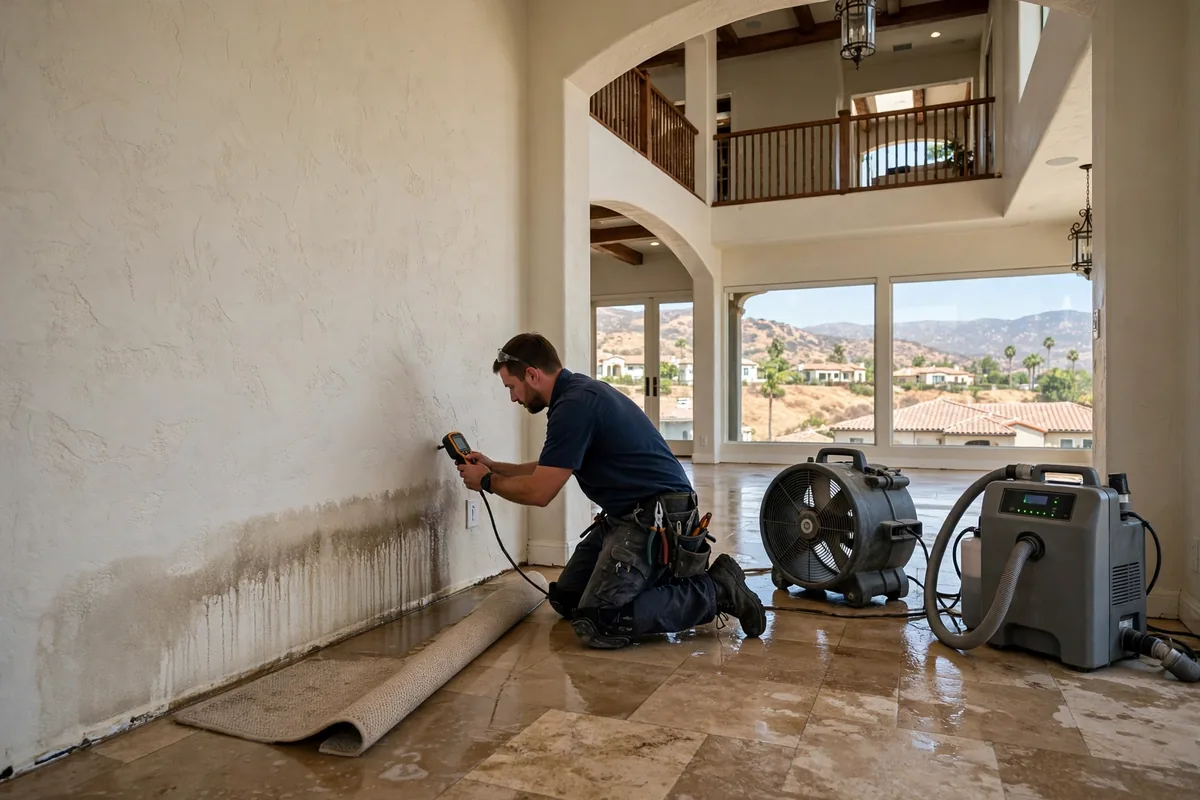
Slab Ranch Homes
West Anaheim, Loara and Magnolia. Copper lines under 1950s and 60s slabs, pinhole leaks, warm floors, and water heaters in garages.
Colony and Older Homes
The Anaheim Colony and the downtown edge. Pre-war and early postwar homes with galvanized lines, cast iron drains and original hardwood under newer floors.
Anaheim Hills Homes
Canyon Rim, Peralta Hills and Nohl Ranch. Two-story stucco, upstairs wet rooms, slope drains and retaining walls deciding where storm water goes.
One thing, stated plainly: Water Damage Pros is a California company, not the service provider that dries your home. The company takes your call and matches it by ZIP code; the independent local contractor who arrives does the work. The company address, phone and email are in the footer of every page.
What Should You Do in the First Hour After Water Gets In?
In Anaheim, the first hour usually means deciding whether the water came from below the slab or above the ceiling. Work this list in order, and only where it is safe.
Stop the source
If the water is coming from a pipe or appliance, turn it off at the main shutoff, usually near the front curb or beside the garage. A pinhole leak in copper piping can run for days before it shows, so shut the water off even if the wet patch looks small. For upstairs leaks, turn off the fixture valve in the bathroom above before you touch anything below.
Kill power to wet rooms
Water near outlets, appliances or the panel means those rooms go dark first: switch their breakers off. Never step into standing water that may be electrified. When water comes through a ceiling, switch off the rooms below it as well, since water follows wiring down.
Photograph everything
Capture the rooms, walls, floors, belongings, and the water line on the wall. Insurers decide on records, not memories, and photos taken before cleanup carry the most weight. Photograph the ceiling stain and the room above it, since the source is often one floor up from the damage.
Move what you safely can
Lift documents, electronics and furniture legs out of the water. Move items below the wet ceiling first, since a saturated ceiling can come down without warning. Do not throw damaged items away until your insurer says otherwise.
Start extraction fast
Every hour of standing water means more plaster, flooring and framing beyond saving. Call (833) 555-0100: an early call gets a local crew moving while damage is still small, and a slab leak caught in the first hour usually means one room dried, not a whole floor.
Why Do Anaheim Slab Homes Spring Leaks Nobody Can See?
A slab leak is a supply line failing under concrete. The water has nowhere to go but out and up: into the slab, the flooring and the wall bases, often for weeks before the first visible sign appears.
Crews read the same pattern of clues:
- A warm or damp spot on the floor with no spill to explain it
- The water meter spinning while nothing in the house is running
- A water bill that jumps with no change in use
- The sound of running water when the house is quiet
- Tile or engineered flooring that lifts or cracks along one line
The trades split the work the same way everywhere. A leak detection specialist finds the failure, and a plumber fixes the line, by rerouting it through the walls or by opening the slab. The restoration crew handles what the water already did: extraction, drying to a verified standard, and the repairs. One call to (833) 555-0100 starts with the water and the drying, and the crew will tell you plainly where the plumbing stands. Fixing the pipe does not dry the floor: a slab and subfloor left wet are how a small leak becomes a mold and flooring job.
Which Water Problems Can One Call Handle in Anaheim?
Six kinds of water damage cover almost every Anaheim water damage call. Each has its own process and risks.
Water Extraction and Standing Water Removal
Truck-mounted and portable extractors pull standing water out of floors and carpets before drying takes over. The first hours decide the size of the job.
Burst Pipe Water Damage
A supply line lets go and a room takes on water by the gallon per minute. Source stopped, water out, structure dried.
Sewage Backup Cleanup
A sewage backup is a biohazard, not a mopping job. Contaminated materials come out, surfaces are disinfected, and the crew works protected.
Flood and Storm Water Cleanup
Hillside runoff, backed-up storm drains and wind-driven rain bring silt and contamination with them. Pumping out, disinfecting and drying, in that order.
Structural Drying and Dehumidification
Extraction removes the water you can see. Drying removes moisture inside walls, floors and framing, verified by daily meter readings.
Mold After Water Damage
Mold can begin on wet materials within 24 to 48 hours. Fast extraction and verified drying keep a water job from becoming a mold job.
Water Damage Repair in Anaheim: Putting the Rooms Back After Drying
Water damage repair in Anaheim starts only when the meters say the structure is dry. Repairs put back what drying took out: flooring, drywall, baseboards, cabinets and paint, scoped in writing before work begins.
Anaheim repairs turn on flooring. The postwar tracts run tile, laminate and engineered wood over slab: tile set on a properly dried slab can often stay, while swollen laminate and engineered boards usually come up, and the crew should say which is which from the readings, not from habit. Upstairs leaks add ceilings to the list: drywall below a bathroom is cut only where readings show it stayed wet, then patched and textured to match.
Cabinets and counters
Kitchen cabinets sit in the path of both slab leaks and upstairs leaks, and their bases soak early. The scope should name which cabinets get dried and saved and which get rebuilt, because that record shapes the claim.
The written scope
Repairs should start from a written scope: which rooms, which materials, what gets matched and what gets replaced, agreed before work begins. Kept with the drying records, it is the file your insurer reviews.
Water Removal in Anaheim Happens Before Any of This
Every repair on this page waits on one thing: the standing water actually out of the house. Extraction is the first machine work of the job, and the rooms pumped dry in the first hours are the rooms that need the least rebuilding later.
One honest expectation: repairs run on the drying schedule. Closing a ceiling over a wet cavity hands you a mold problem with fresh paint on it. Dry first, verified by meter, then rebuild.
How Does the Work Run, From First Call to Fully Dry?
Four steps, in the same order on every job. A crew that skips one leaves damage behind.
Stop the water
The source is shut off or contained, power to wet rooms is made safe, and the damage is photographed before anything moves.
Extract
Standing water comes out with truck-mounted and portable extractors. Wet materials are checked one by one: what can dry in place, what has to come out.
Dry
Air movers and dehumidifiers run for days, not hours. Readings are taken daily against a dry standard; equipment comes out only when the numbers say dry.
Restore
Plaster, drywall, flooring, trim and paint go back in. The final walkthrough checks the finished work against the written scope.
Does Homeowners Insurance Cover Water Damage in Anaheim?
Usually, when the water is sudden and accidental. The pattern across California policies looks like this:
Usually covered
Damage from a pipe that bursts suddenly, a failed water heater or a split supply line: extraction, structural drying, and repair of soaked plaster, floors and cabinets. The crew's moisture records and photos become part of your claim.
Usually not covered
Replacing the worn-out pipe itself, slow corrosion leaks that ran for months, maintenance failures, and rising water from outside, which needs its own flood policy. Many policies also cap mold work, so a water job left wet becomes a mold bill the policy barely touches.
Slab leaks are the Anaheim argument: most policies pay to open and restore access to a failed line, and to repair the water damage around it, but not to replace the worn pipe itself. Where the line failed decides the claim, which is why the detection report and the crew's moisture records matter. Keep both.
Do not wait for an adjuster before starting extraction and drying. Policies carry a duty to limit further damage, and claims are decided on the cause of the water, not on whether you protected the home quickly. Keep every record the crew gives you.
How Is a Home Dried When the Leak Is Under the Slab?
A slab leak wets a house from underneath, which changes the drying plan: the water spreads wide under flooring before it shows, and the concrete itself becomes the slowest thing in the house to dry.
The wet map is wider than the wet spot
Water under pressure escapes the pipe, travels along the underside of the slab and rises where it finds a path: at wall bases, expansion joints and the lowest flooring. The first meter survey usually finds moisture well beyond the warm spot that gave the leak away. Crews map the full footprint before placing equipment, because drying only the visible patch leaves the edges wet.
Concrete dries on its own schedule
Slab concrete holds moisture deep and releases it slowly, so readings are taken at the slab and in the flooring above it, daily. Tile set in mortar tolerates the process; engineered wood and laminate are lifted where readings show the core has swollen. Rushing this stage is how a new floor ends up over a damp slab, which is a mold and adhesive failure a few months later. Garage slabs and converted garages follow the same rule, and they are read separately, because they often sit lower than the house slab and take water first.
The pipe fix and the drying run together
While the structure dries, the plumber's repair, a rerouted line through the walls or an opened section of slab, is scheduled so the two jobs finish together. The crew coordinates access points with the plumber and keeps its drying records separate from the plumbing invoice, because the insurer treats the line repair, the access work and the water damage as three different questions.
Anaheim: The City Behind the Calls
Anaheim is Orange County's largest city, home to about 347,000 people and to Disneyland, one of the most visited theme parks on earth. It began as a German wine colony and grew into a city of postwar suburbs, resort hotels, and hillside homes, and each of those layers has its own way of taking on water.
The Weather: Warm, Dry, and Then a Winter Storm
Anaheim averages about 14 inches of rain a year, most of it between December and March, with January and February the wettest months. Summers are hot and essentially rainless, with highs in the 80s and heat waves over 100, and the record high, 115 degrees, came in July 2018. Winters are mild, with lows rarely below 40, so frozen pipes are almost unknown here. The pattern that matters is the burst: long dry months let soil shrink and shift around buried lines, and then a winter storm arrives all at once, finding roof weaknesses and overwhelming drains that sat dry for half a year.
When Water Damage Peaks in Anaheim
Winter, December through March, is the peak season. January and February bring most of the year's rain, and the first heavy storm finds roof leaks in the postwar homes of West Anaheim and pushes hillside runoff toward the lower rooms of Anaheim Hills. Storm calls cluster in those two months.
Summer has its own pattern. Air conditioning condensate lines clog in the long heat, upstairs bathrooms and laundry rooms in the two-story homes leak down into living rooms, and slab leaks show up in every month, because they come from pressure and pinhole copper, not weather. The quietest stretch is usually late spring, April and May, between the last winter storm and the first heat wave.
The History: A Wine Colony That Became a Resort City
Anaheim was founded in 1857 by fifty German families who built a wine-growing colony on the Santa Ana River, blending Ana, for the river, with the German heim, home. Disease destroyed the vineyards in the 1880s, and orange groves and walnut orchards took their place. The city incorporated in 1876 and stayed largely agricultural until July 17, 1955, when Disneyland opened on 160 acres of orange and walnut groves and changed the city forever. The postwar decades filled the flat land west of the resort with the tract homes that dominate the housing stock today, and later growth climbed into Anaheim Hills. That is why the city's plumbing tells two stories: copper slab lines under the postwar tracts, and upstairs supply lines in the newer two-story homes.
The City at a Glance
Anaheim is home to about 347,000 people, the most populous city in Orange County and the tenth largest in California. The Disneyland Resort anchors the city's economy, alongside the Anaheim Convention Center, Angel Stadium, and the Honda Center, and the resort district draws about 23 million visitors a year. Beyond the resort, the city runs from the flat postwar neighborhoods of West Anaheim to the hills of Anaheim Hills in the east. For a homeowner, the practical fact is the split: a slab home on the flat and a two-story home in the hills face different water risks, which is why matching runs by ZIP code, not by city name.
Questions Anaheim Homeowners Ask After Water Damage
How fast can a crew get to my Anaheim home?
Crews are matched by ZIP code inside the city, so the crew heading to you is already working these neighborhoods, from the Colony to Anaheim Hills. Most calls get a crew the same day, often within hours, and timing for your ZIP code is stated honestly on the call.
What are the signs of a slab leak under my floor?
A warm or damp spot on the floor with no spill to explain it, a water meter that spins while nothing is running, a bill that jumps with no change in use, the sound of running water in a quiet house, and tile or engineered flooring that lifts or cracks along a straight line. A detection specialist confirms it with acoustic and pressure testing before anyone opens concrete.
Can tile and engineered wood floors be dried in place?
Tile set in mortar over a dried slab frequently stays. Engineered wood and laminate are less forgiving: once the core swells or the boards peak, they come up. The decision comes from moisture readings at the slab and in the flooring, taken daily, not from a guess on day one.
Does homeowners insurance pay for a slab leak?
Usually the damage, not the pipe. Policies commonly cover access, meaning opening and restoring the floor or wall to reach the failed line, plus the water damage itself, and exclude replacing the worn-out line. The detection report that locates the failure is the document the claim turns on, so keep it with the crew's moisture records.
Does insurance cover storm runoff into my Anaheim Hills home?
Water that flows over the ground and enters at a door or garage is classed as surface water or flood, which standard policies exclude; a separate flood policy covers it. Water from a failed drain line on your own lot can be argued differently, so photograph the source carefully before cleanup starts.
How long does drying take in an Anaheim home?
Most homes run 3 to 5 days of structural drying. Slabs are the slow part: a saturated slab and the flooring over it can run longer, and an upstairs leak adds a ceiling cavity that has to read dry before it closes. The crew takes meter readings daily, and equipment leaves when the numbers match a dry standard, not when a set number of days has passed.
Which Anaheim Neighborhoods and ZIP Codes Are Covered?
Matching is done by ZIP code. This guide covers the city of Anaheim: 15 ZIP codes, from the Colony and the west side tracts to the Anaheim Hills:
All 15 covered city ZIP codes:
Just outside the list but still in Anaheim? Call anyway. Matching runs on the ZIP code of the home, and the closest crew takes the job.
Water in the House Right Now?
Shut the water off at the main, keep clear of electrical hazards, and take photos before anything moves. Then make the one call that starts your Anaheim water damage restoration job with a local crew: extraction first, meter-checked drying behind it, and a written scope first.